
- Solutions
- Resources
- About
- Product and Technology
The year advertising's AI conversation grew up
How InMobi Ad Experiences turned the agentic-era promise into proof, from FOSSIL to AJIO, and what comes next.

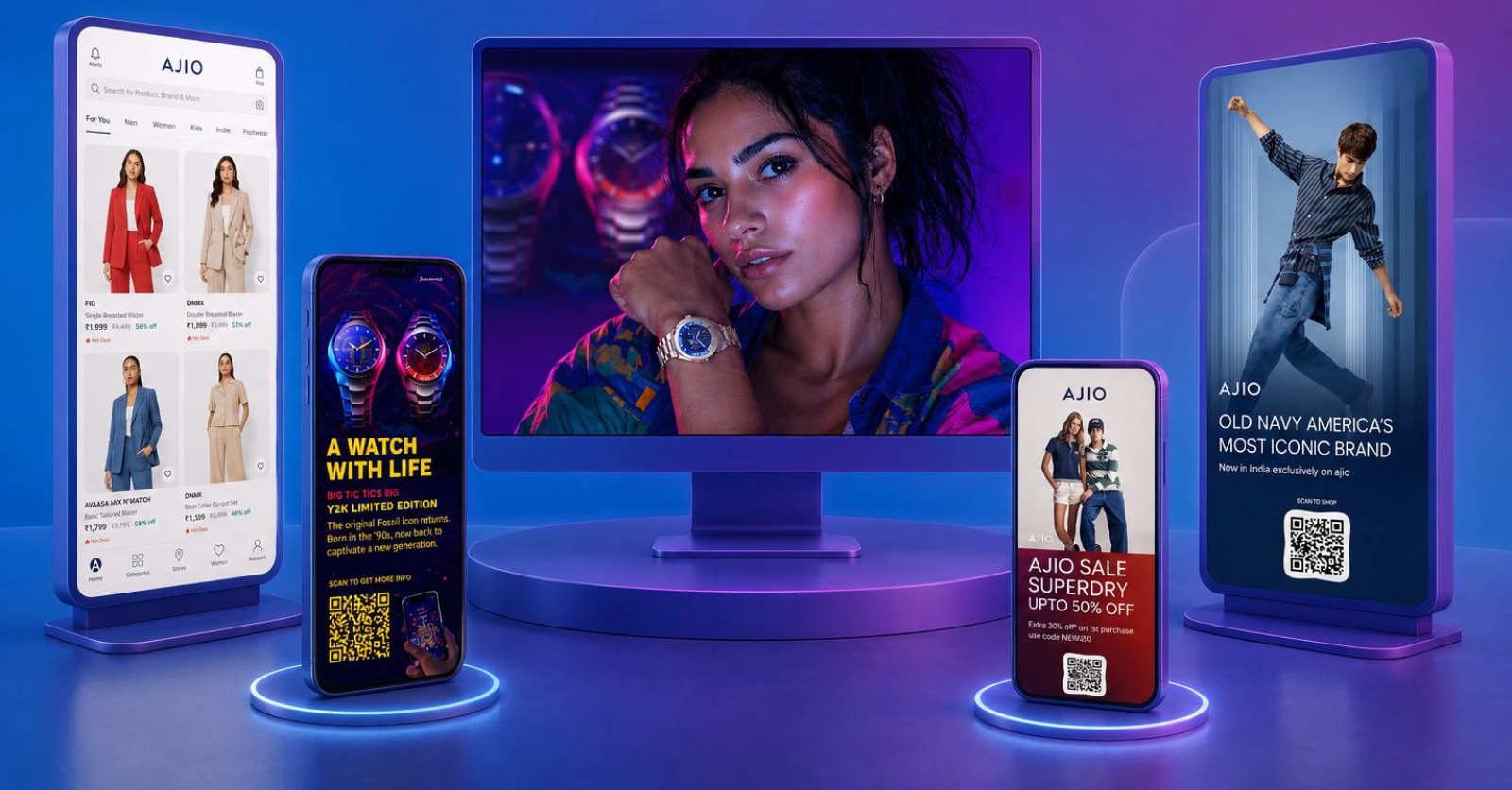
For three years, our industry's loudest conversation has been about artificial intelligence, and mostly about what it might one day do. This year feels different. All the hype on all the topics is coming to a head. The talk has shifted from endless and fantastical possibilities to proof here and now, and that shift matters more than any single announcement.
I want to make the case for proof with something concrete: InMobi Ad Experiences, our market-facing proposition for the agentic era; the two campaigns that convinced me it works; and the agentic capabilities already running in market, not on a slide.
From a Catalog to an Outcome
For most of its history, ad tech has been sold in pieces. Media here, audience data there, supply somewhere else: each bought separately, each optimized for its own metric, and stitched together by whoever happened to be buying. Ad Experiences is a deliberate flip of that model. Instead of selling the pieces, we orchestrate inventory, audience, creative, and measurement in service of a single outcome. We call it peak outcomes through peak consumer experience: when the moment is engineered for the person first, the outcome follows. And it holds end-to-end, because every experience runs on one unified intelligence.
The spectrum of these experiences spans the entire marketing funnel, organized into three families.
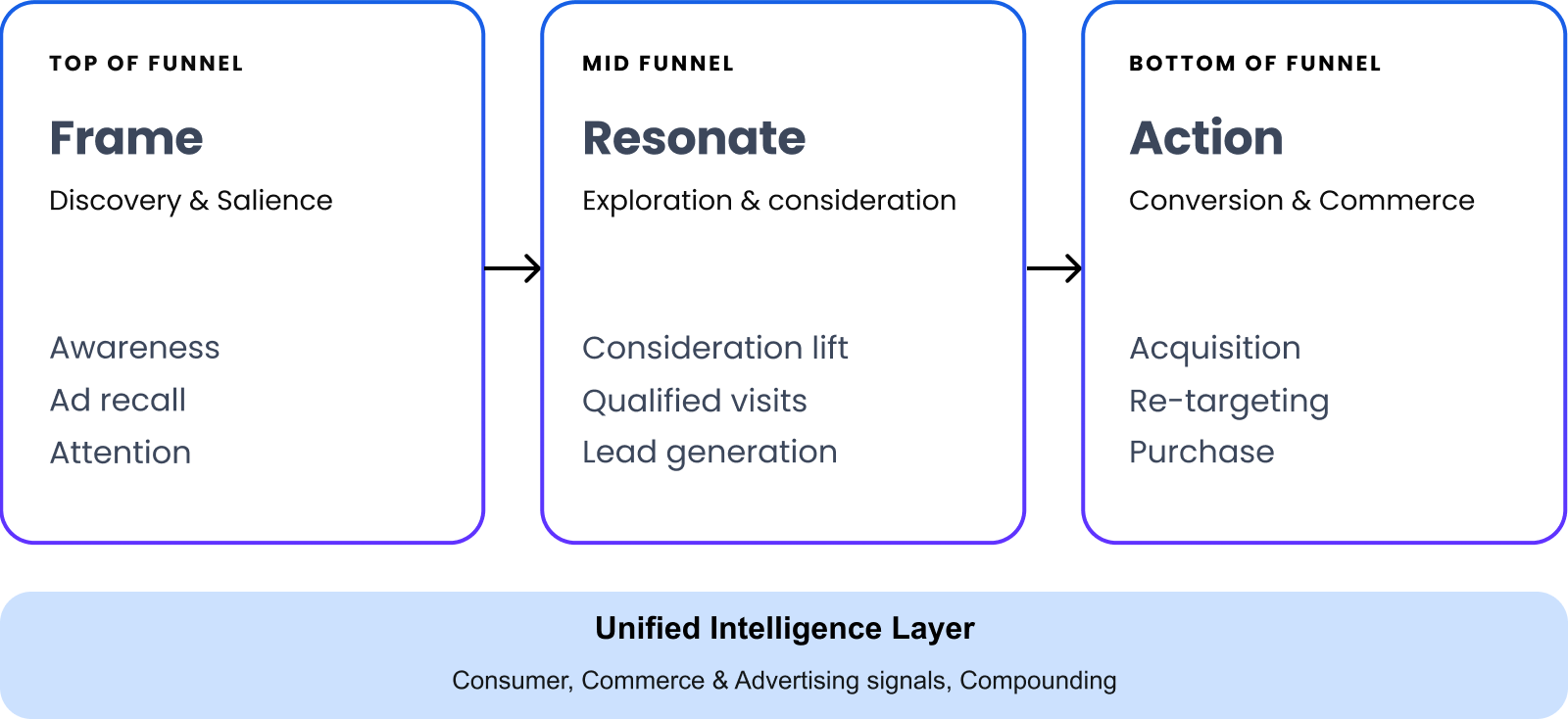
'Frame' works the top of the funnel: awareness, ad recall, attention. 'Resonate' owns the middle, where consideration and intent are won through qualified visits, lead generation, and footfall. 'Action' closes the bottom with acquisition, re-targeting, and purchase. A marketer can buy a single outcome or sequence them, but underneath, every experience draws on the same unified intelligence. That orchestration, not the inventory, is the proposition, and it is a genuine flip in how ad tech has traditionally operated.
Two Numbers That Tell The Story
Two campaigns, at opposite ends of the funnel, convinced me this is more than a framework.
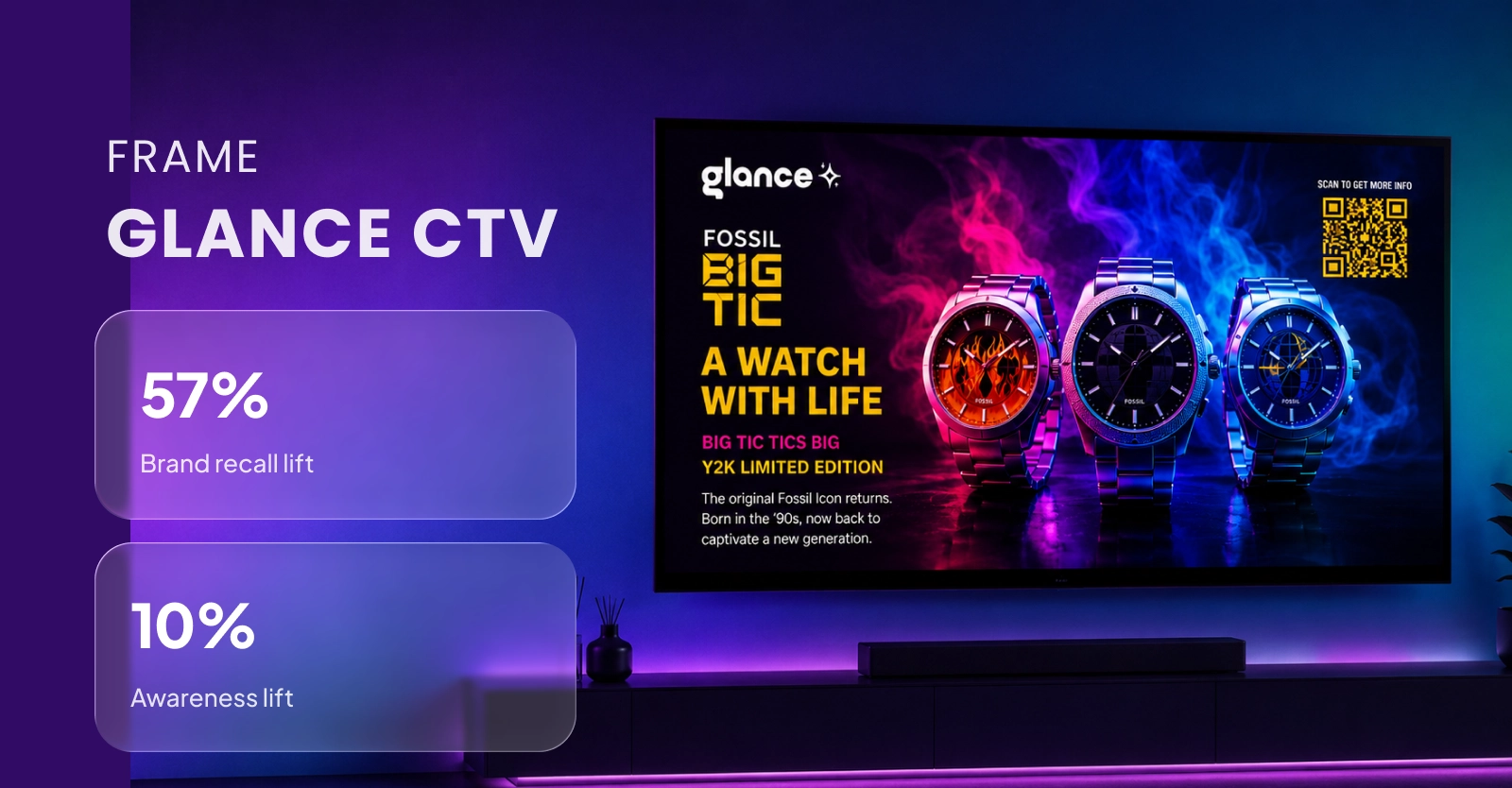
When FOSSIL reintroduced its BIG TIC collection this spring, it didn't run a banner campaign. It ran a cinematic brand moment woven into Glance's AI-powered content on connected TV, matched to the look of its surroundings and part of the experience rather than an interruption. The more a viewer engaged, the more the platform tailored what came next. Measured independently by Cint, the campaign lifted brand recall 57% and awareness 10% against an unexposed baseline. That is the top of the funnel doing real work.
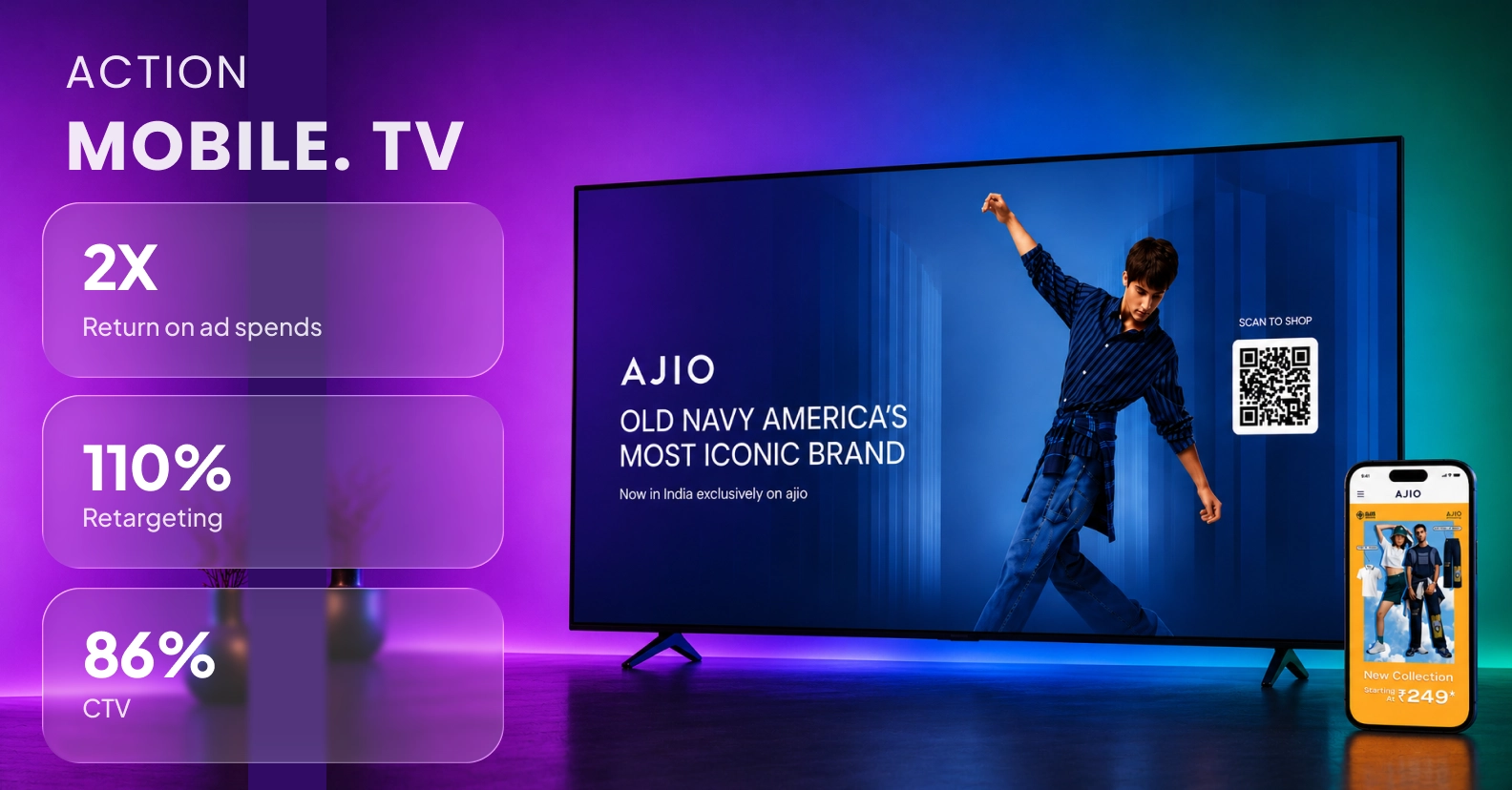
Now the other end. AJIO, one of India’s leading fashion marketplaces, had spent years sharpening its buyer intelligence on mobile. The hard part of connected TV is that it usually starts cold: no history, months of learning. We didn’t start cold: we carried AJIO’s mobile intelligence straight into the living room, so CTV bidding began with what we already knew about each shopper. Return on ad spend doubled, up 110% on retargeting and 86% on CTV, and a channel AJIO had treated as an experiment became core to its growth
Why It Works: One Unified Intelligence
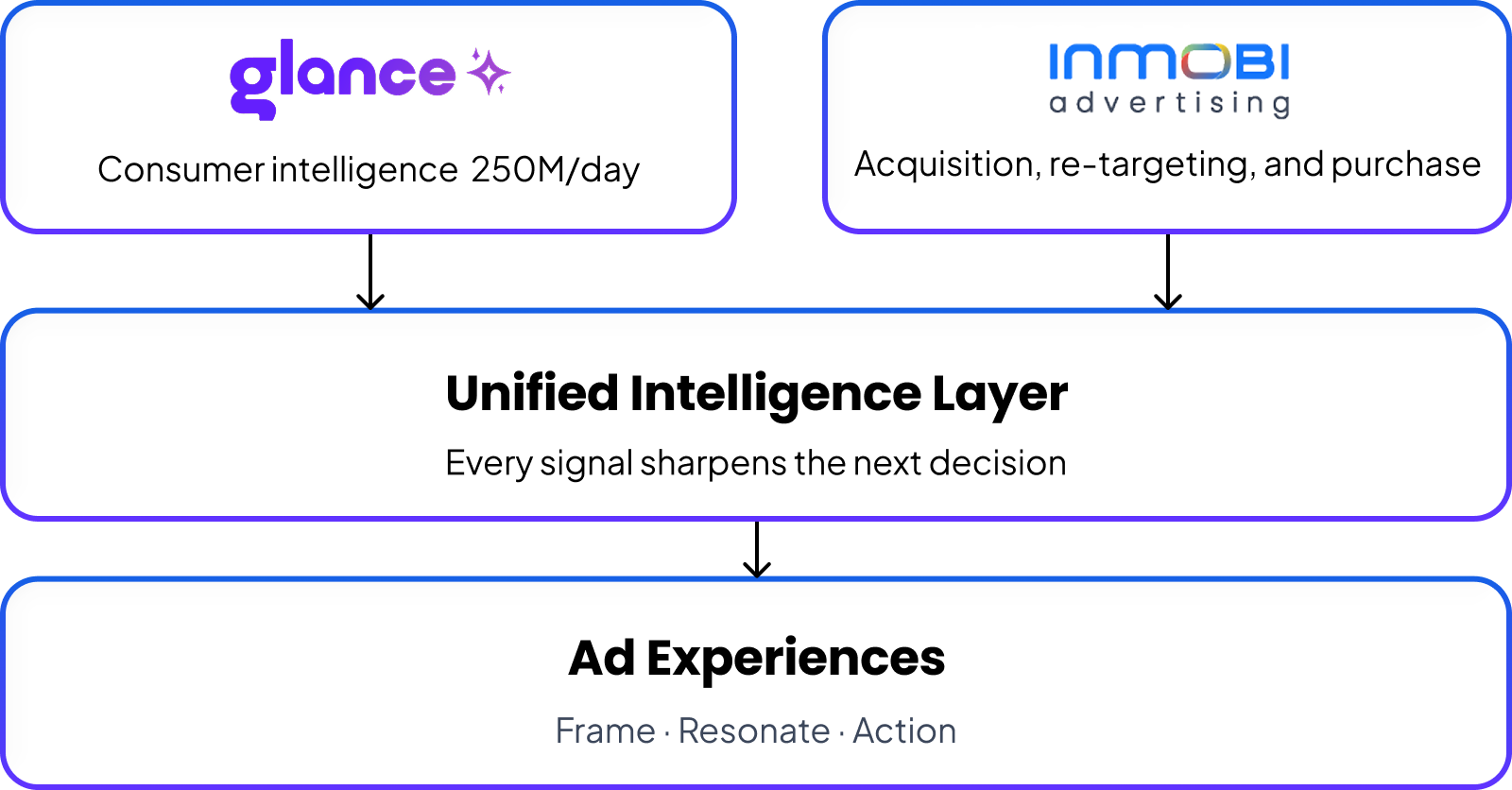
Neither result came from a clever media plan. They came from what sits underneath. Glance, our intelligent shopping agent reaching 250 million people a day across mobile and CTV, understands the consumer. InMobi Advertising, with nearly two decades of programmatic reach across 2.5 billion devices, acts on that understanding. Between them runs a single unified intelligence layer where consumer, commerce and advertising signals reinforce one another: intelligence that isn't just powerful, but purpose-built for outcomes.
The effect compounds. Every campaign teaches the system something it applies to the next, which is why a brand outcome and a performance outcome can come from the same place without trading one against the other. It is also the hardest part to copy: you can buy inventory and you can license a model, but you cannot easily assemble a consumer platform and an advertising platform that have been learning from each other for years.
That same intelligence is already doing more than running campaigns. Glance operates as an agentic commerce platform today, carrying a shopper from inspiration to purchase in a single step. And through our integration with Scope3's AdCP, a buyer's agent and our sell-side agent now transact autonomously, machine to machine. It is the first step in an open approach to agentic buying, one we'll extend across protocols as the standards form, and it runs live in market today.
What Excites Me Most: AI on Ads, and Ads in AI
What excites me most are the two directions we're building hardest in:
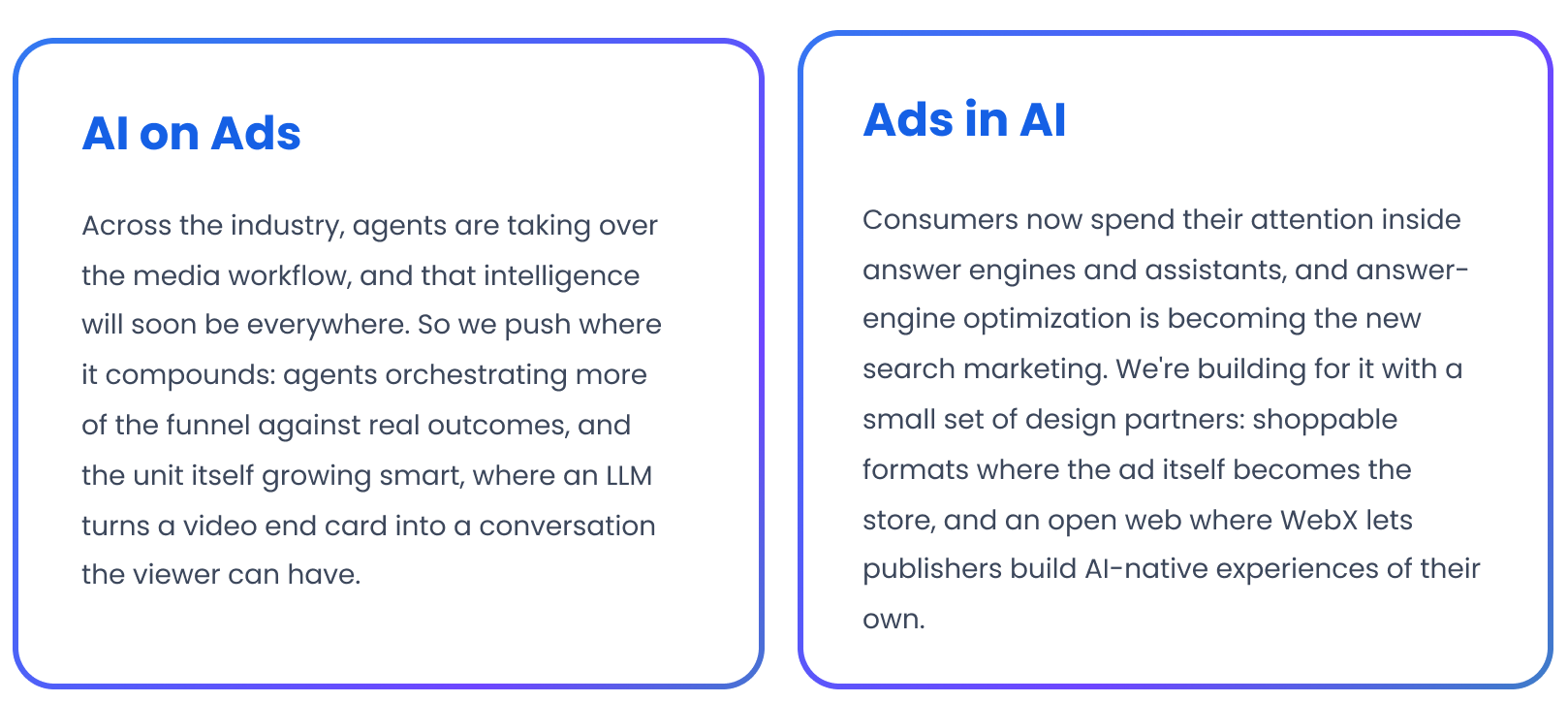
Underneath both sits the agent that matters most: the one acting for the consumer as it discovers, decides, and increasingly buys. That is where demand is born, and with Glance, our shopping agent, we own the surface it lives on. The closer that agent comes to acting on the consumer's behalf, the more the distance between seeing something and owning it collapses to a single step, and that step is the one we intend to own.
The Takeaway
The brands that win the next decade won't be the ones who choose between brand and performance, or who wait for the agentic era to arrive.
They'll be the ones who refuse the trade-off, who move early and let the advantage gradually compound, and who treat AI as something to prove, not just something to talk about.
and the proof I want to build with you.






Stay Up to Date
Register to our blog updates newsletter to receive the latest content in your inbox.